Ask someone what Thai food is like, and you often hear the same answer.
“Isn’t it really spicy?”
It is probably the most common question we hear at The Thai. First time guests ask it when they open the menu. Groups ask it while deciding what to order. Someone at the table always raises it.
The idea that Thai food is always extremely hot has stuck around for years.
It also happens to be wrong.
Where the Myth Comes From
Part of the confusion comes from a few well-known dishes.
Thai green curry, for example, can carry a noticeable heat. Some stir fried dishes can also be quite punchy when they are cooked traditionally.

People try one of these dishes, remember the spice, and assume the entire cuisine works the same way.
It does not.
Thai cooking is built on balance. Heat is only one element among several. Sweetness, acidity, salt, and richness all play their part. In many dishes, spice sits in the background rather than taking centre stage.
Thai Food Is About Balance, Not Fire
A good Thai dish should feel layered.
You taste something savoury first. Then a slight sweetness. Then a gentle warmth. Perhaps a little acidity that lifts the whole thing.
None of those flavours should dominate the others.
When people describe Thai food as “spicy”, they are usually reacting to one specific component rather than the whole picture.
In reality, many Thai dishes are mild or medium in heat.
Some of the Most Popular Thai Dishes Are Mild
Take a look at what people actually order.
Chicken Pad Thai is the most popular dish on our menu. It has almost no heat at all. The flavour comes from tamarind, peanuts, and a savoury sauce that coats the noodles.
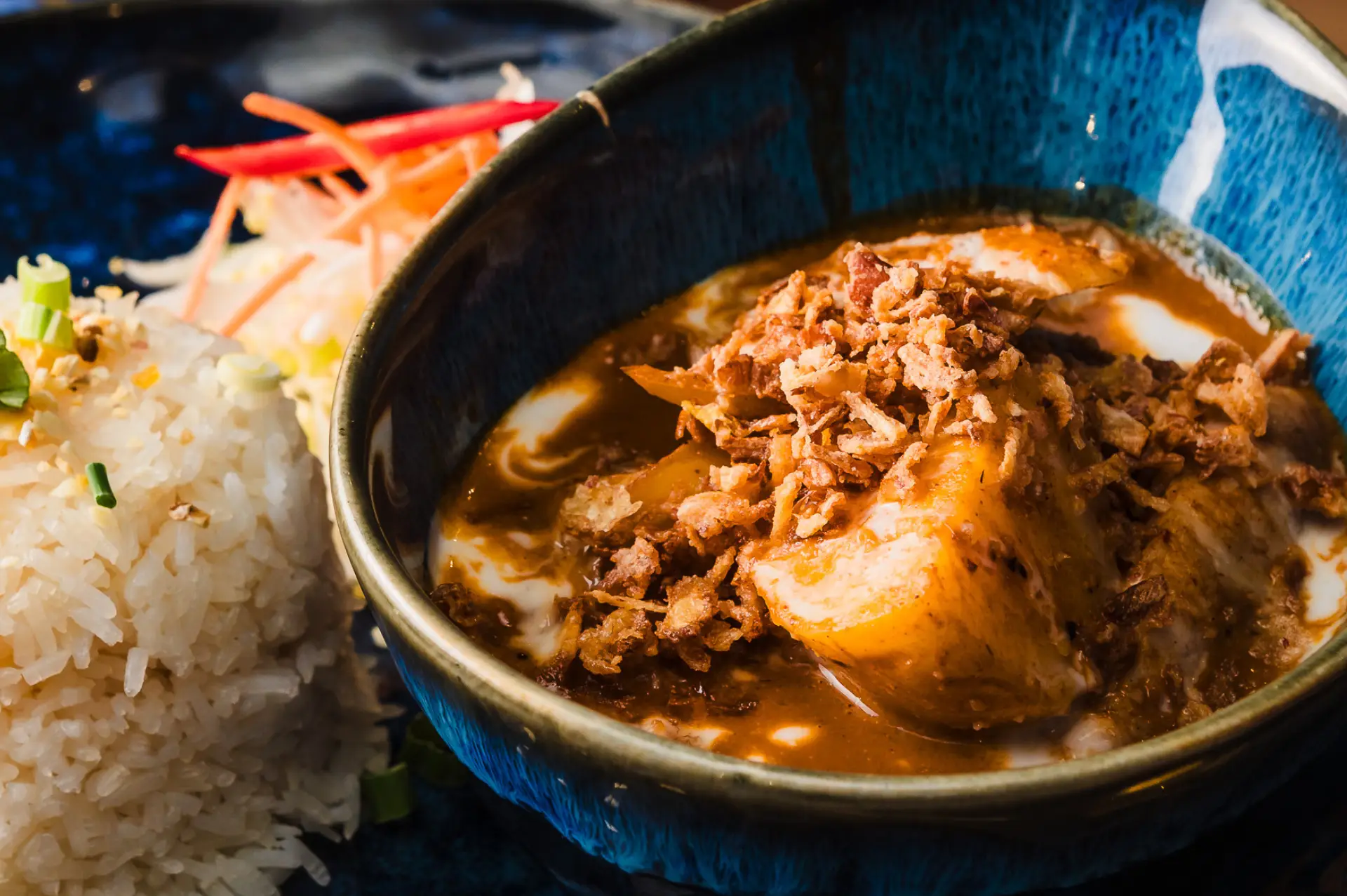
Massaman curry is another favourite. It is rich and warming but very gentle when it comes to spice. The coconut base, potatoes, and mild spices make it one of the easiest Thai dishes to enjoy.

Panang curry sits slightly warmer but still balanced. It has depth and richness rather than sharp heat. That is one reason it has become the best selling curry here.
None of these dishes would qualify as aggressively spicy.
Yet they appear on tables every night.
The Spice Can Usually Be Adjusted
Another part of the myth is the idea that you have no control over the heat level.
That is rarely the case.
Most Thai kitchens can adjust spice levels easily. If someone prefers a milder dish, the chef can scale things back. If someone enjoys more heat, that can be increased too.
The goal is for guests to enjoy the meal, not to challenge their tolerance for chilli.
That flexibility often surprises first time visitors.
Why the Myth Persists
Once an idea sticks, it tends to stay around.
People hear the same comment from friends. They read it online. They repeat it before they have even tried the food themselves.
Eventually the assumption becomes fact in people’s minds.
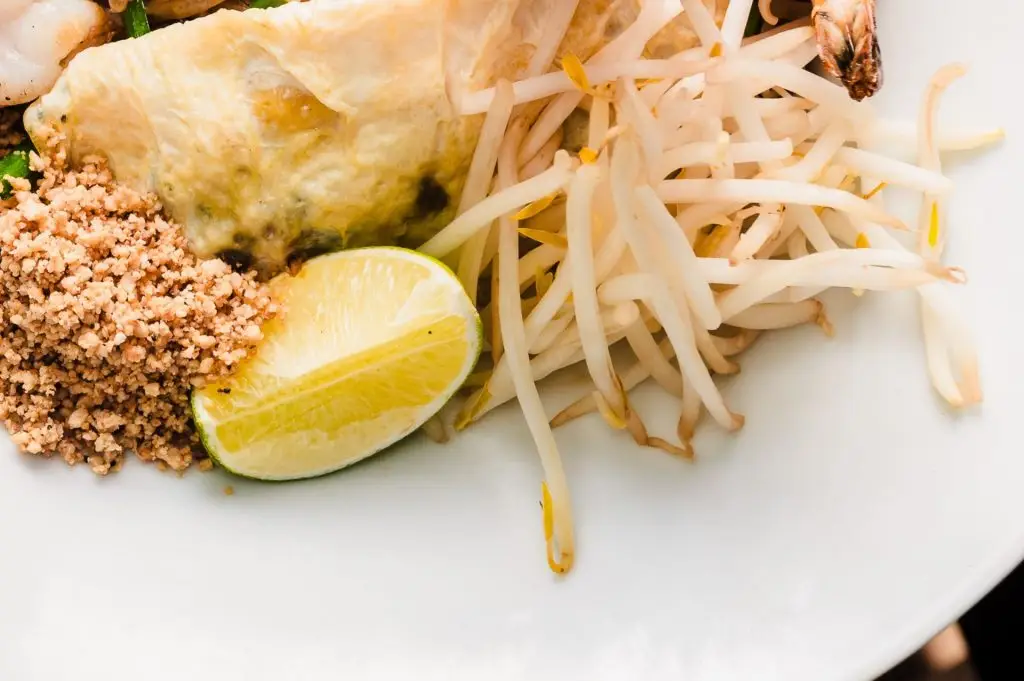
Then they try a dish like Pad Thai or Massaman curry and realise the truth is much more interesting.
Thai food is not defined by spice.
It is defined by balance.
What Happens When People Try It for Themselves
We see the same reaction again and again.
A guest arrives slightly cautious. They expect every dish to carry serious heat. They order carefully.
Then the food arrives.
The flavours are layered. The spice sits comfortably rather than dominating. The dish feels rich and balanced rather than overwhelming.
That is usually when the myth fades away.
After that, the question about spice tends to disappear.
People start asking a different question instead.
“What should we try next time?”